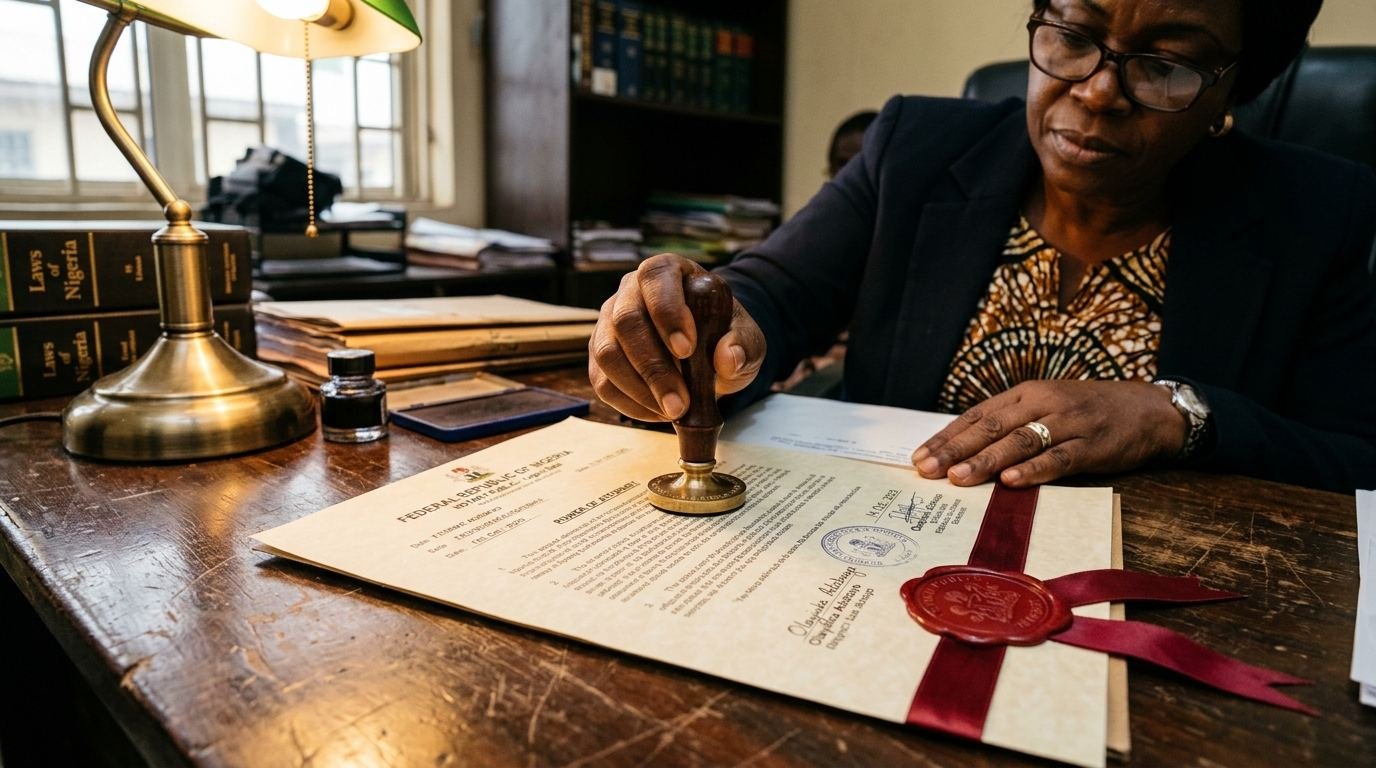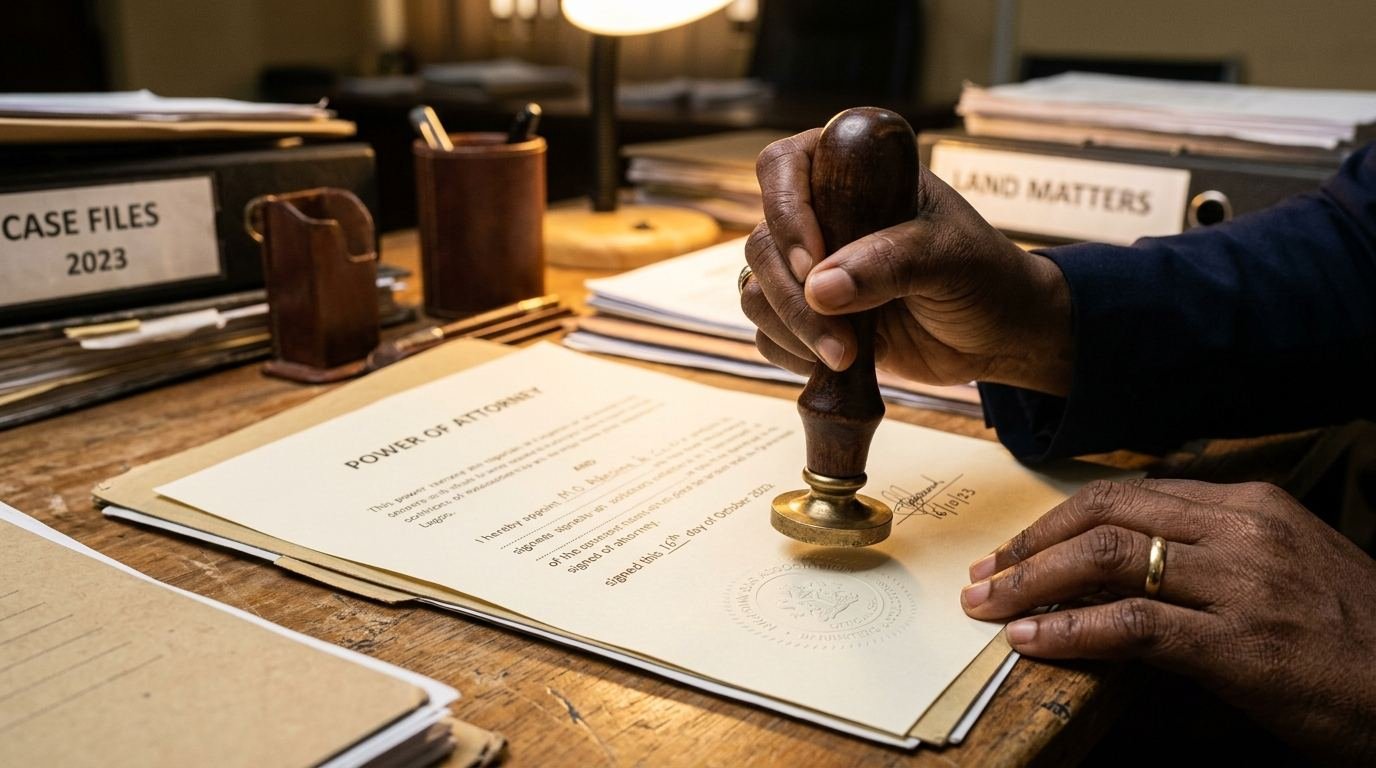
A power of attorney drafted for domestic Nigerian use frequently fails when presented to a foreign bank, land registry or court — not because the underlying authority is defective, but because the drafting conventions the receiving jurisdiction expects were never anticipated.
Specificity over generality
Many foreign registries and banks require a power of attorney to specify precisely which acts the agent may perform — a general “do all things necessary” grant, common in Nigerian practice, is often rejected abroad as insufficiently specific for high-value transactions like property sale or company registration.
The power of attorney that works perfectly at a Lagos land registry can be rejected outright at a receiving registry abroad for reasons that have nothing to do with the grantor’s intent.
Authentication chain, again
Like other documents for foreign use, a power of attorney typically needs the full consular legalisation chain — notarisation, MFA authentication, embassy legalisation — completed before it is presented, not attempted retroactively once the receiving authority objects.
Drafting for the destination, not just the source
The practical fix is drafting the power of attorney with the destination jurisdiction’s expectations in mind from the outset — specific enumerated powers, the correct execution formalities, and the authentication chain built into the transaction timeline rather than treated as an afterthought.
This note is general commentary on Nigerian legal practice and does not constitute legal advice or create a lawyer–client relationship. Outcomes depend on the specific facts and the applicable law at the time. For advice on a particular matter, speak with the firm.
Keep reading