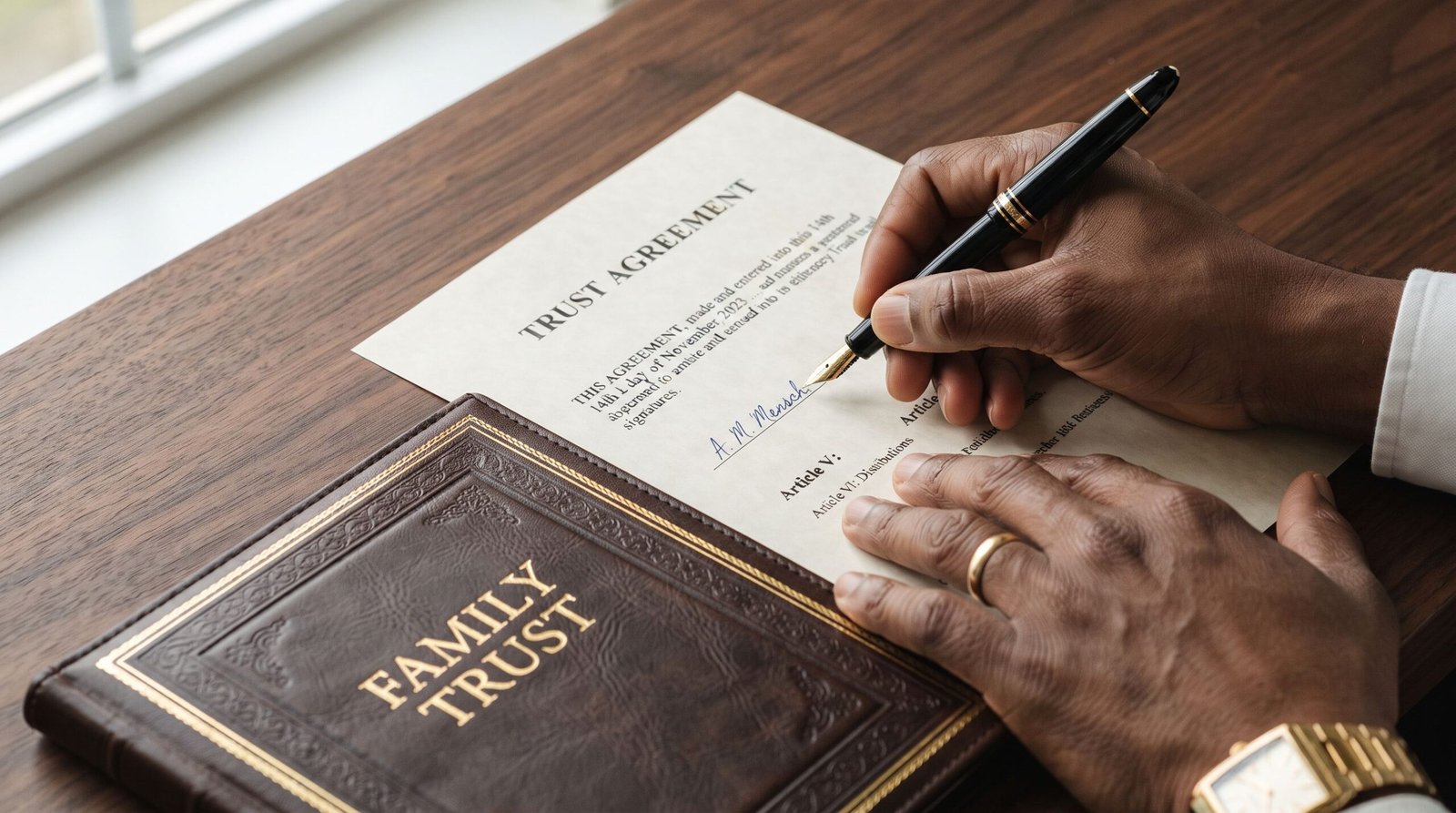
A trust deed drafted with the founder as the presiding mind — every discretion routed through them, every decision assuming their continued involvement — is a deed that works well for exactly one generation. The founder who wants the structure to genuinely outlast them has to draft for trustees, and beneficiaries, they will never personally know.
Succession of trusteeship, not just succession of assets
The deed needs a clear, workable mechanism for appointing successor trustees — who decides, on what criteria, and what happens if the process stalls. A deed silent on this leaves the family to resolve trustee succession through court application, at exactly the moment the trust is least equipped to absorb delay and cost.
A trust that only works while the founder is alive to interpret it is not an estate plan. It is a delayed probate problem with extra steps.
Discretion needs guardrails, not just trust in the trustees
Broad trustee discretion, without a letter of wishes or defined distribution principles, forces second-generation trustees to guess at intentions the founder never wrote down. A detailed, regularly updated letter of wishes — alongside the deed itself — is what keeps distributions aligned with what the founder actually meant.
Building in review, not just permanence
A trust drafted as permanently fixed, with no mechanism for amendment as family circumstances change, often becomes the very rigidity that causes a second-generation dispute. A deed that survives is one that anticipates change and gives future trustees a lawful, structured way to respond to it.
This note is general commentary on Nigerian legal practice and does not constitute legal advice or create a lawyer–client relationship. Outcomes depend on the specific facts and the applicable law at the time. For advice on a particular matter, speak with the firm.
Keep reading